Decorative and festive lighting
Christmas tree strings, curtain lights, light screens and firework lights are bought for an occasion and installed the same afternoon. Two quantities decide the result: the length of light the object needs, and the fixing that keeps it in place for the season.
In this group the light is the decoration rather than the illumination, so length, LED pitch and symmetry outweigh luminous flux. Failures are visual before they are functional: a string a metre short of the last turn, a panel wider than its window reveal, a firework light whose arms have sagged off the radial plane.
The Christmas tree guide converts tree height and wrap method into metres of string; the decorating guide fixes the order in which lights, baubles, ribbon and topper go on; the curtain guide matches panel width and drop to the window and separates the four variants, two of them with a fast-refresh version; the two light-screen guides give the resolution arithmetic and the panel-chaining order; the firework guide covers hub loading and wall area. Quantity errors are made before purchase, and they are the most common cause of a poor result in this group.
Christmas and festive strings

How many Christmas lights does a tree need?
Bulb count is the wrong unit: two strings with the same count can differ in length by a factor of three. Length by tree height and wrap method; why a spiral wrap and a branch-by-branch wrap differ threefold in consumption; and what the pattern of a half-dark string indicates.

Decorating the tree in layers: lights first, then everything else in order
Lights buried first, large baubles deep and low, themed pieces at the tips, ribbon to connect it, topper last. A size-and-quantity table for a 1.8 m tree, the 6:3:1 colour split, and the triangle rule for spacing.
Curtain lights and light screens
A curtain light and a light screen share a form factor — a horizontal header with vertical strands — and differ in function. A curtain light is decoration sized to a window; a light screen is a low-resolution display sized to the content it will show. The packaging rarely distinguishes them; the curtain guide sets out how to identify the variant in hand.
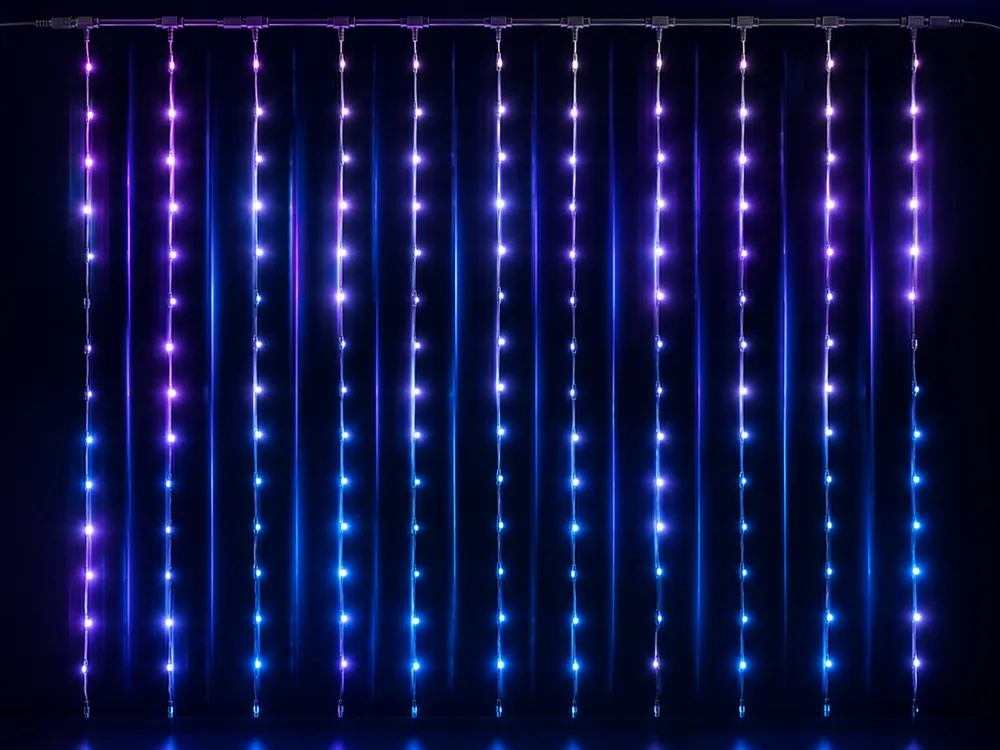
Curtain lights: sizing, hanging, and which variant you have
Four variants, two of them with a fast-refresh version, that look identical on the box, separated by signal method, refresh and linkability. Matching panel width and drop to the window; hanging without damaging the reveal; and why a single panel cannot later be upgraded into a linked screen.

Light screens: what a pixel curtain can actually display
The resolution arithmetic that sets what a panel can show; the minimum viewing distance at which an image resolves; the number of text characters that fit; and the grid configuration that keeps patterns the right way up.
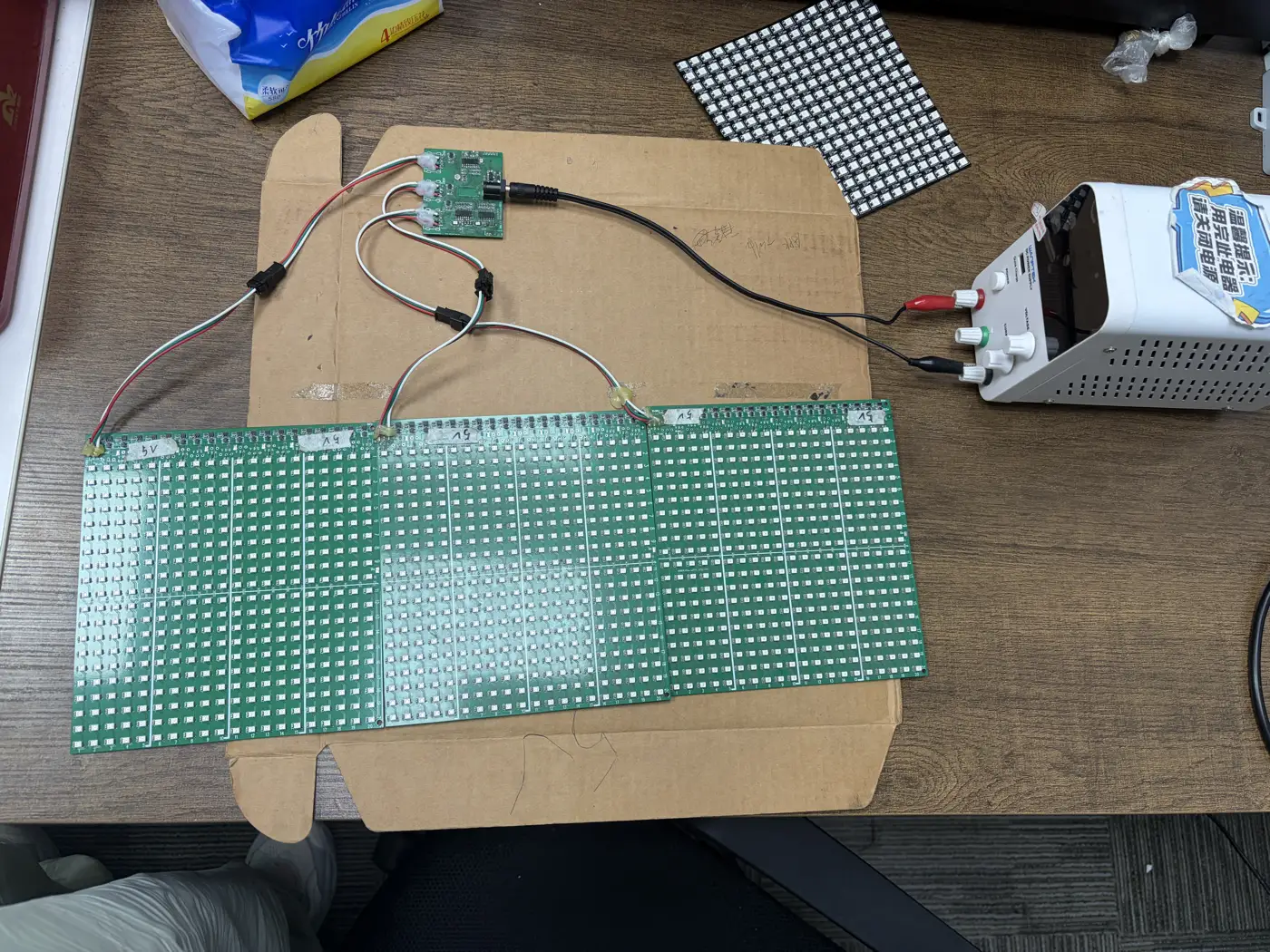
Chaining several panels into one display
Data passes from panel to panel; power is injected into each panel separately; and the app must be given the mounting order and orientation. A diagnostic table maps each type of scrambled image to its cause.
Firework lights

Installing a firework LED light
Why the central hub carries the load; the wall area the radial arms require; where the tail cable terminates; and the changes an outdoor installation needs.
Before installation
Most products in this group run on addressable strip or pixel strings, so the control app must match the controller inside the light. A unit that will not connect is checked against which app controls your light first.
Long runs and multi-panel installations raise the power question; sizing the supply and fixing a dim far end covers it.